Where Ludo comes from
Ludo is a simplified version of the Indian game Pachisi and was first sold as Ludo in England in 1896. Close relatives include Mensch ärgere Dich nicht in Germany, Parchís in Spain and Petits Chevaux in France.
A race game for 2 to 4 players: roll the die and move your four tokens around the board and into your home before anyone else.
 By Lena Berger
Updated
01 — Goal
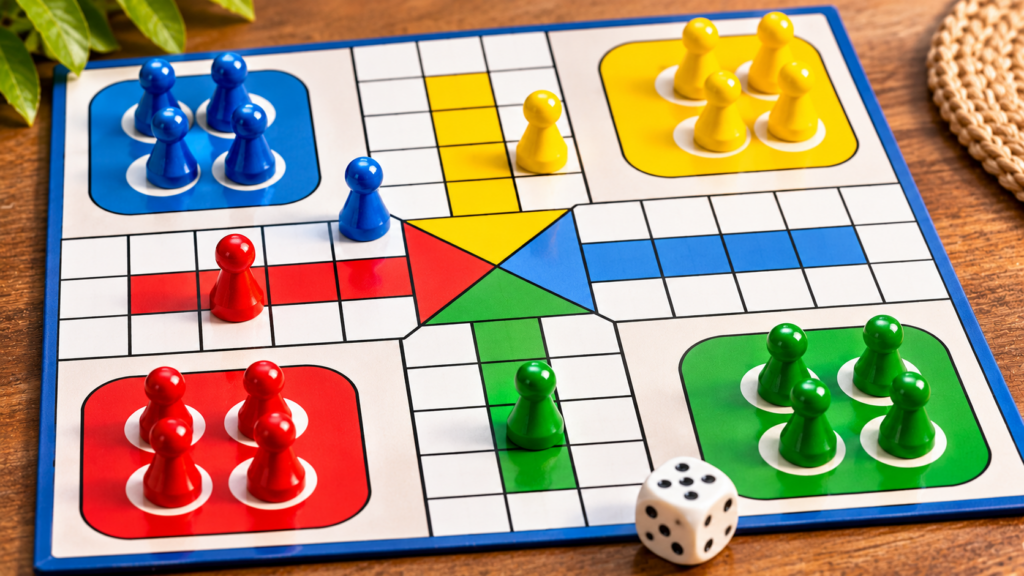
Ludo is a race game for two to four players, each playing for themselves. You move your four tokens once around the board and then up your own home column to the finish in the centre. The first player to get all four tokens home wins. The others can play on for second, third and fourth place.
02 — Setup
03 — A turn
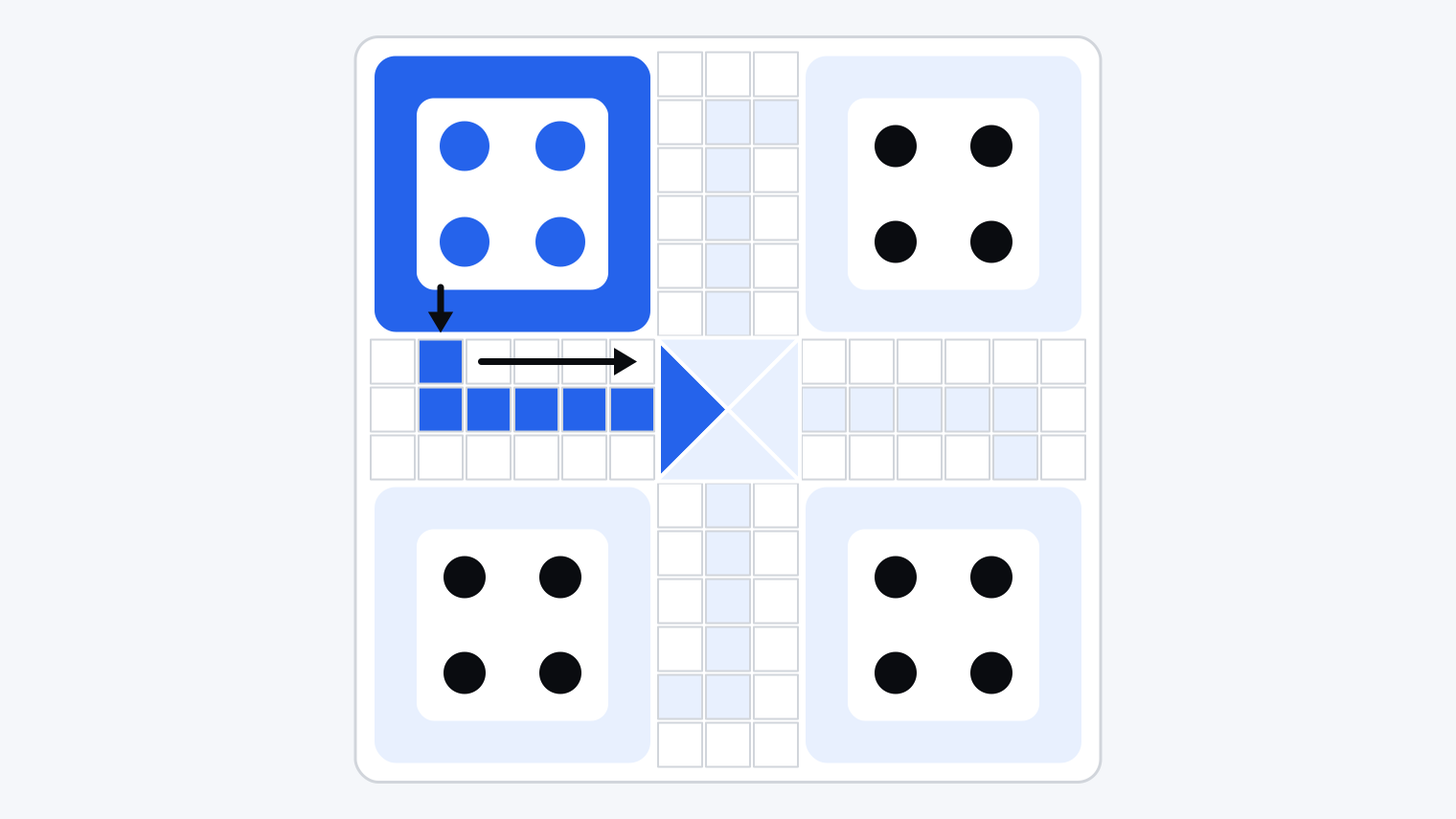
Common house rules: many players say that if you roll a six three times in a row, you don’t move on the third roll and your turn ends. Some groups also let you bring out a token on a 1 as well as a 6, or give you three tries to roll a six. Agree on these before you start.
04 — Capture
If your token ends its move exactly on a square with an opponent’s token, you capture it. The captured token goes back to its yard, and its owner needs another 6 to bring it out again.
Two of your tokens on one square: rules differ here. Often the two tokens form a block, and an opponent who lands on it is sent back to their own yard instead. Other groups don’t allow two tokens of the same colour on one square at all. Groups also differ on whether bringing out a token captures an opponent sitting on your start square. Agree on both before you start.
05 — Home
Other versions: Indian Ludo is often played with two dice and has a safe star square in each quarter of the board. Some versions also give you a bonus roll for capturing a token or getting one home.
06 — Tips
Ludo is a simplified version of the Indian game Pachisi and was first sold as Ludo in England in 1896. Close relatives include Mensch ärgere Dich nicht in Germany, Parchís in Spain and Petits Chevaux in France.